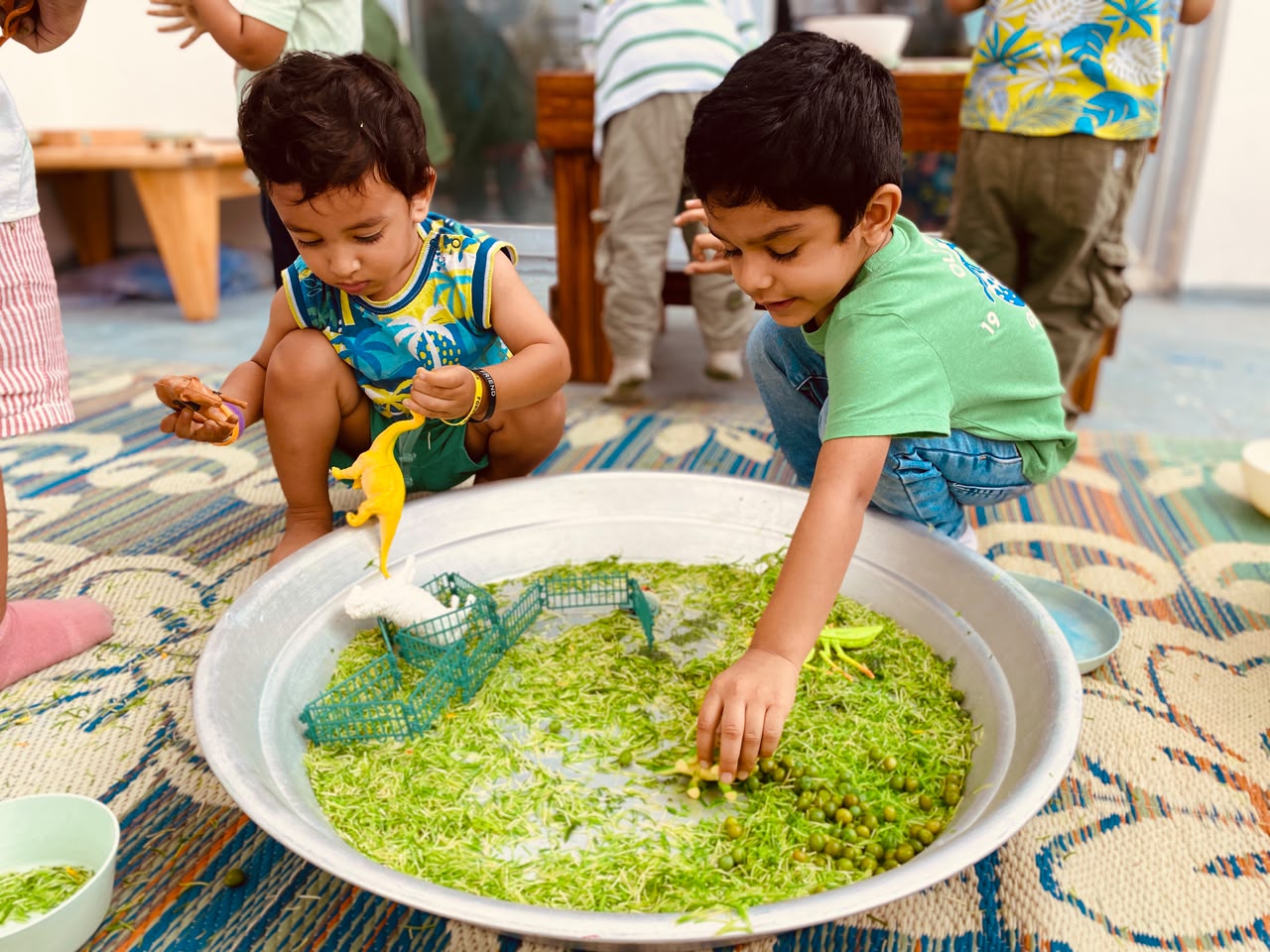
In the early years of childhood, play has a significant role in developing skills that are imperative for a child’s group. Play allows children to activate their ne
According to Harvard graduate school of education, “Active songs with movements provide physical activity and also memory skills. Songs like “I’m A Little Teapot” require children to start and stop or slow down and speed up, helping to build self-control. Imitation games like “follow the leader” let adults hand off play to children and are great tests of working memory, attention, and self-control. The guide encourages adults to let toddlers lead and set the pace of play as much as possible, taking cues from them about when to stop, start, and switch to another activity.”
Reference : Play Helps Children Build Better Brains.
Here are a few play based learning activities that the little learners at The Bambini Creek- nature-inspired preschool do on daily basis:
Stacking blocks or wooden blocks might look like a simple activity about constructing buildings or structures, but if we look into it, it is a play that inculcates risk taking abilities among the little learners. The sound of dropping or construction also awakens their nervous system
Water has a calming effect on the students and helps to regulate their emotions and nervous system. Waterplay introduces them to “wet sensory play” that plays a key role in developing new neurons in the brain. Also, since the chemicals in the pool aren't a safe option for the younger one and might trigger allergic reactions, and hence, waterplay is a safer option.
Sand play helps to develop physical strength and is also a great fine motor skill development activity. Sand play not just engages their fingers but also provides a great activity for hand-eye coordination and introduces the concept of team work & mindfulness.
Story telling is a form of introducing early vocabulary development for children. The children get engaged to the colors and soft pictorial representations thereby improving their attention span and relatability with real life situations.